Sunday, March 25, 2012

Satan leaves first (and other knowledge picked up around the table)

A few things I learned last night over drinks with some Moroccan friends:

1. Social Rules - In Arabic, there is a popular saying where one person asks: "Who leaves the group first?" and everyone answers, "Satan."

This phrase really sheds light on Moroccan social habits. Friendship in Morocco happens quickly, but keeping and cultivating a strong bond between friends is a favorite (and highly prioritized) pass time of Moroccans. Leaving a social situation prematurely can result in severe hshuma (shame) upon you.


2. Couscous Origins - The tradition of Friday couscous came out of necessity. In Morocco, Saturday is the souq, or market, where everyone goes to get their meat, fresh produce, and other goods. The rest of the week there were no new shipments coming into the medinas, which meant that by Friday everyone was trying to use all their leftover produce before the souq the next day. The best way to do this was by making a stew of vegetables and meat. To make it more filling, they also steam semolina grain (couscous) to eat with the dish. In a way you can think of couscous as filling a similar cultural/gastronomical role as paella in Spain or bouillabaise in France.

 I was also told that their is a folk tale about a man who came to Morocco and fell in love with a woman from afar. When he left the country he couldn't stop thinking about her and knew he needed to return to find her and marry her. The man returned to Morocco in search of the woman and didn't eat for days. He finally found her on Friday after days of not eating. He was very weak and requested a "complete" meal, filled with meat, vegetables, and grains, so that he could regain his strength. The result? Couscous.

3. Moroccan Progress in the form of a Feed Lot - Morocco is in the midst of building its first feed lot down south. Up until now, their meat and dairy industry has been kept relatively small with the exception of a few major companies. While it breaks my heart to think that in ten years the meat and dairy industry in Morocco may be very similar to the United States, it shows how development is not a black and white issue. While there are clearly many benefits to progress and development on all levels of society, with it come inevitable sacrifices. Furthermore, can standard butchering practices at feed lots conform to halal requirements?


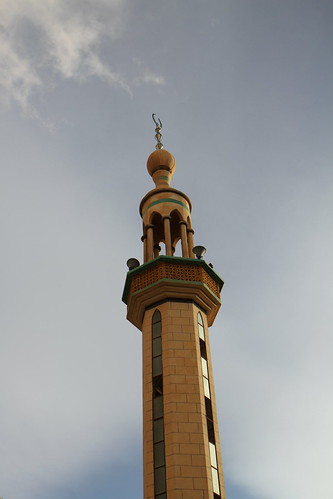
4. Best Kept Secret to Filming in the Middle East - Don't let the traditional gulf-style wardrobe fool you: the new M.I.A. music video, "Bad Girls" was filmed in a desert town in southern Morocco called Ouarzazate; home to Atlas Film Studios. This film studio has been used over the decades as a cheap and safe alternative backdrop for desert and post-apocalyptic films, such as Babel, Star Wars, Body of Lies, and The Green Zone, among countless others. Morocco is also a popular choice for directors whose films are set in the Middle East. How can you tell if a film is actually shot in the Middle East or in Morocco? Look at the minarets. In the Middle East all minarets are cylindrical. In Morocco they are square as a result of the Andalusian influence.

Koutoubia Mosque, Marrakech


Minaret in Syria

Oh, also the trick when they drive the cars on two wheels is no CGI-magic. Apparently it is a relatively popular pass time in the Gulf for guys who want to "soup up" their cars. To my knowledge, Moroccans still prefer the simpler thrill of speeding and parking lot doughnuts. 


Saturday, March 24, 2012

Parliamentary Assembly of the Euro-Mediterranean Union and "Le Maroc qui Bouge"

This morning as I was jogging down Boulevard Mohammed V, I was surprised to see a row stretching several blocks of tourist vans and buses outside of Parliament. Upon the windshield of each car was an official looking piece of paper that said that it was the "8ième édition de l'Assemblée Parlementaire de l'Union Euro-Méditerranée" (8th annual Parliamentary Assembly for the Euro-Mediterranean Union). The assembly, which is having conferences today and tomorrow in Rabat, will be discussing ways in which the European Union and North Africa can work together to improve overall economic and sociopolitical stability in the region as well as with their global allies.  More specifically, they will be talking about ways that parliamentary deputies can support their colleagues whose home countries are undergoing a democratic transition as a result of the Arab Spring. Another major talking point will be about the role that North African economies have in reviving economic growth in the European Union. With the most recent commercial agreement signed between Morocco and and the European Union earlier this year, the EU believes that the key to ensuring a bright future in Europe is by improving their relationships with their neighbors on the other side of the Mediterranean.


Since arriving in Morocco last August, I have noticed an undeniable shift of perspective - whereas in previous decades it had always been North Africa looking for cues and guidance from their colonial patriarchs like France, Spain, and Italy, the tables have now been turned. With the European Union struggling to stay afloat amidst its severe economic crisis as sociopolitical morale hits an all-time low, it is time for the once "top-dogs" to look to their developing southern neighbors for guidance and support. In January of this year, Stephan Füle, European Commissioner for Enlargement and European Neighbourhood Policy, visited Morocco. After his visit, he concluded that the country was going in the right direction and was very pleased with its reform developments made so far. Morocco is one of the fastest growing developing countries in the world, and it is no secret that there is serious consideration on both sides to make it one of the first "Arab" countries to join the European Union.


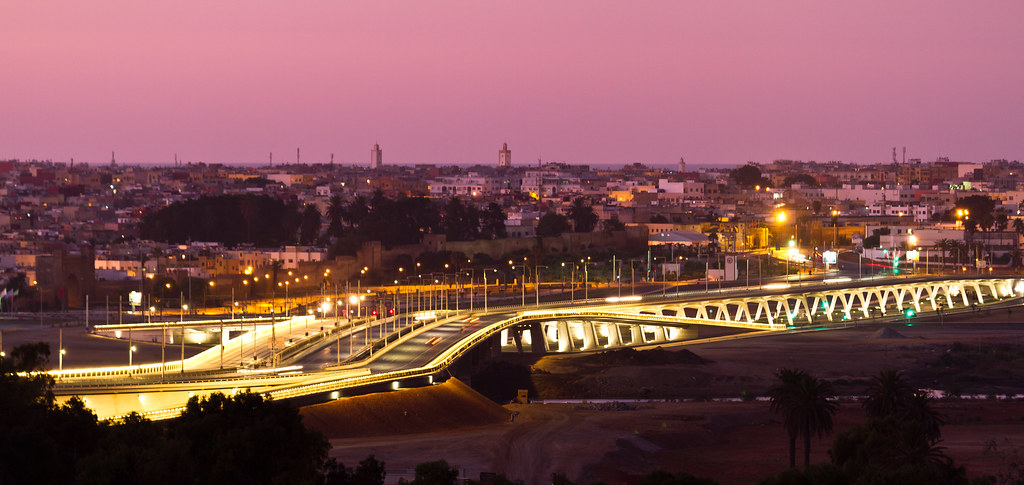
However, with anything growing at the speed that Morocco is, growing pains are inevitable. In the last two years a beautiful new bridge was built to connect Rabat and Salé, its neighbor across the river. A tramway was built (with intention to further expand its route in the near future) in Rabat was a safe and efficient way for commuters and students to get around the city. Morocco Mall in Casablanca opened earlier this year and is the first world-class mall in Africa (It also has two Starbucks Coffees and an aquarium). A high-speed TGV-style train line opened between Casablanca and Tangiers. Every time I revisit cities across the country I am immediately struck by how much it has developed since last time I was there - roads are wider, new luxury hotels and condominiums are built, new glossy car models fill the downtown road systems. Moroccan development is moving at a high velocity and it shows no signs of slowing down.


Even though the major cities are receiving serious makeovers, it only takes a train or bus ride to remember that Moroccan progress is by no means all-encompassing. On the train ride between Rabat and Tangiers for instance you pass mostly through farmlands and small villages with tin-roofed clay houses and sheep scattered about in the fields. The closest taste these communities have to the development witnessed in the major cities is through their satellite televisions. As the sun was going down, we passed by a small town about 30 minutes outside of Asilah where it seemed like the entire town was sitting along the hillside waiting for the train. We heard faint cheering and saw them all waving to us as we sped past. It was a beautiful sight. Despite their remote positioning, the villagers recognize the train as a symbol of progress and hope for the country. Everyday, they watch the train come and go along the tracks carrying families, businessmen and women, and tourists from city to city. Even though they aren't passengers aboard, the train helps them stay connected to "Le Maroc qui bouge" (Moving Morocco).


With Morocco's impeccable geopolitics, and social, political, and economic stability, it is no surprise that Morocco is becoming an important regional player. While many other countries in the MENA region continue to be engulfed in sociopolitical upheaval and Europe in the midst of an economic downfall, Morocco is rising to the occasion as a beacon of hope in the darkness. I just hope that as Morocco continues to develop and become increasingly involved in European and Western politics that it doesn't leave behind a part of itself in the process.

Thursday, March 22, 2012

Tarifa: Seeing Africa from a different perspective

After a while, it doesn't matter where you live - routine sets in and the "honeymoon" feeling wears off. The cultural, environmental, and linguistic differences that were once new and special become normalized and fade into a soft indecipherable blur. I sleep through the 5 am call to prayer and forget which language I had conversations in. I find myself sometimes caught off guard when I am walking down the street and realize that the oak-lined sidewalks of my childhood have been replaced by tall looming palm trees. I never thought I'd have to remind myself that I am living in North Africa, but le voilà.

An easy way that we have learned to keep things "fresh" has been to travel. Unfortunately, it prevents a bit of a catch-22: to travel, you need money. To have money, you need a job. When you have a job, it is difficult to get time off to travel, which leads to the boredom created by routine, and by proxy, a desire to travel.

We have been making an effort to travel more frequently this Spring. It certainly helps that a condition of our visas is that we must leave the country every 90 days to renew them. Last weekend we decided to go to Tarifa, Spain. We chose Tarifa because of its proximity to the Moroccan coast. On a clear day from the beach in Tangiers you can sometimes see the coastline in Tarifa. On Friday morning we packed up a few things, took the 4 hour train to Tangiers, and then hopped on a ferry. We arrived in Tarifa around 11 pm on Friday. The gates to the port lead you right into the cobble-stoned roads of the old "medina" city. Feeling slightly off-kilter from the various forms of transportation and fatigue, I felt like we were entering an alternate-reality version of Morocco. The narrow streets, white washed walls, and painted doors seemed all too familiar. There were two major differences, however, that reminded me we had crossed the border: Catholic churches and rows and rows of bars. The weather was very mild and on our way to find our hostel we passed groups of locals and tourists mingling around outdoor tables beside pubs, smoking cigarettes, and petting dogs. Even though we felt exhausted from a day of traveling, we were pleased by our timing, because11 pm is just about the time that Spaniards seem to wake up from their afternoon siestas and begin to go out.  Below is a photo of our welcome-to-Tarifa mojitos, with mint and raw cane sugar muddled right in front of us:


The following day we spent at the beaches. Tarifa is known for its strong winds and many tourists come for the kite and wind surfing. The coastline was freckled with different colored kites and sails. We began by walking along the beach on the Atlantic Ocean (where we saw a presumably Arab female pop singer filming a music video) and then crossed over the boardwalk onto the beach on the Mediterranean Sea. Sitting on the soft warm sand amongst Spanish families, international tourists, and nude sunbathers, I was stunned by the view: across the sparkling ocean was the large dark green mountainous terrain of North Africa. We met an American woman who moved to Spain 8 years ago and has started a family in Tarifa where she opened the first English school in the city. When talking about where we were coming from, she admitted that she didn't know anything about Morocco, let alone Rabat, the city where we live. It was an odd feeling to be sitting on the beach in Spain facing Morocco and talking to a fellow American woman who spent almost a decade on the opposite side of the Mediterranean without knowing anything about the neighboring country. She was fascinated when we told her about how architecturally similar Andalucia and Morocco are because of their long complicated history. Looking up past the beach the coast of Tarifa is lined with ancient fortress ruins that are almost mirror images of those found along the Moroccan coastlines. How is it that two countries with such shared history and culture can be so cognitively disconnected?


In any case, spending the weekend in Tarifa not only helped me recharge my batteries but it also helped me reconnect where I am, what I'm doing, where I'm going, and how I'm feeling. My current global positioning is Morocco. Instead of making comparisons between Spain and the United States, I am finding commonalities between Spain and my present home turf of Morocco. Walking through the winding streets of the old Tarifa "medina" and noticing street names with Arabic cognates or stumbling upon a restaurant or boutique that markets the Moroccan or African aesthetic exoticism really helped remind me how lucky I am to be able to observe and appreciate the cultural similarities that Morocco and Spain share because of my understanding of how historically these two countries' stories weave together.


The Spaniard lifestyle is one that I can certainly get behind. Their day starts around  ten, morning coffee can be replaced with beer, and after a leisurely afternoon milling around cafés and a long lunch, it is customary to have a siesta to recharge before a long evening out on the town. Saturday afternoon we were wandering around the old city of Tarifa and heard what sounded like a crowd of people singing, laughing, and banging on drums. We followed the sound into an open neighborhood square lined with taverns opening onto the cobblestoned courtyard. Parents were sitting around outdoor tables having a drink while their children ran around together, performed on a small stage, sang songs, and played musical instruments strewn about. It is scenes like this that remind me of what I love so much about Spanish family culture. Instead of treating drinking and adult socializing as an event that must be kept separate and out of reach of the children, parents take their kids out with them as a way for the family to spend time together. It also gives children positive examples of moderate and responsible drinking.


On Sunday morning we woke up to the sound of church bells ringing outside our window. After a vegan brunch at the Tarifa Eco Center (Tarifa has several vegetarian/vegan cafés, if you can believe that!), we took a leisurely stroll around the city, had a beer, and enjoyed the sunshine. We returned to Tangier by ferry on Sunday afternoon with sand in our hair and a fresh batch of freckles.


Thursday, March 15, 2012

International Women's Day in Rabat

First of all, happy belated International Women's Day! 


International Women's Day, which falls on March 8th, is a much larger holiday in Morocco than in the United States. On March 8th, all the female professors at the office walked about with huge smiles and a bounce in their step. They patted one another on the back and wished one another a "happy women's day". The male professors were also getting into the holiday spirit - wishing all the women at the office a happy day. After her class, the Gender Studies professor  came up to me to wish me a "happy women's day" and struck up conversation. I told her that I was amazed by how widely recognized the holiday was in Rabat, and all of Morocco in general. In the United States International Women's Day is barely celebrated. While surprised by my statement, she suggested that perhaps it was because the United States had already achieved gender equality, and therefore it wasn't as important for them to honor a specific day in honor of women's rights. Although comparatively, it is no question that American women enjoy far more freedoms and much greater gender equality than Moroccan women, I still don't think it's a valid excuse for disregarding the holiday. Shouldn't countries like the United States acknowledge the holiday as a way of setting a positive example for other countries to do the same? 

This semester I have decided to audit the Intensive Advanced Modern Standard Arabic class at the study abroad program. While I have technically already surpassed the curriculum, it is a great opportunity to continue practicing, learning, and refreshing my mind of all the complicated grammar rules. In honor of International Women's Day, my Arabic professor requested that for homework we each go out and purchase an Arabic newspaper, find an article about March 8th, read it, and then present a summary to the class the next day. At first, I thought that the assignment was a bit presumptuous. I wondered if it was safe to assume that each newspaper would include articles with enough content on the holiday for it to be worth using? 

After class that day, I went out and bought As-Sabah ("The Morning" newspaper. As I flipped through the pages, I was amazed to find that there was an entire section of the paper dedicated to articles about International Women's Day, events happening in honor of the holiday happening throughout the country, local and international women's rights news, and editorials about how people feel about the holiday. For homework, I read an article where I learned about the source of International Women's Day, which dates back to the Bread and Roses Strike, which, according to the article, happened in 1912 in New York City.  I did a little research of my own and learned that the Bread and Roses Strike was a women-led demonstration that actually happened in the textile mills in Lawrence, Massachusetts and female mill workers took to the streets to demand improved labor rights for women and children. The article spoke about the Bread and Roses Strike as the first important step in the international women's rights movement. It continued by discussing women's role in the ongoing protests and uprisings happening throughout the Middle East and North Africa, stressing especially the fact that one should not think that Muslim women are absent from this discourse. I found the article to be emotionally charged, fairly informative, and inspiring. It makes me wonder what the Boston Globe looked like on March 8th. 

Another exciting element about having this assignment for my Arabic class was that it forced me to buy a newspaper, sit down, and read it. At first glance, Arabic language newspapers look especially daunting. The small print is so and the pages packed with information and articles would make any non-native Arabic speaker feel slightly intimidated. However, after taking a deep breath and diving in, I was pleasantly surprised by how well I could understand the article at first glance, without assistance from a dictionary. It is small daily achievements like this that remind me that although it may not feel like it, everyday that I step outside my door and integrate myself into Moroccan society, I am learning and growing because of it. Some days a small realization like this is all I need to feel like I'm headed down the right path. 

(It also didn't hurt that on March 8th we went out to dinner and upon receiving our menus, the waiter presented me with a single white tulip wrapped delicately in cellophane and tied with a red ribbon in honor of the holiday.)

Tuesday, February 21, 2012

Happy 1 year anniversary, Feb. 20th Movement!

A year ago yesterday marked the beginning of what is now known as the "February 20th Movement" in Morocco. Inspired by its neighbors in Tunisia and across the MENA region, the "February 20th Movement" was born as a way for Moroccans to stand up against the stagnation and corruption of the current government while not calling for a complete regime change. Within the last year the King has responded to these protests by calling for a new government, and within the last few months the Moroccan people have been waiting patiently as the process takes shape.

An article published in the New York Times yesterday titled "Moroccan Protests One Year On" adequately sums up the situation the Moroccan people find themselves in one year after it all began.


Still, while the uprising of Morocco’s youth brought concessions that unions and human rights groups had failed to obtain in the previous decade, observers say that the real victory is a widespread awakening of political awareness.
“For the first time there is clearly a counterbalance to power — the people,” said Abdellah Tourabi, a researcher at the Paris Institute of Political Studies who specializes in Islamic movements in Morocco. “The ‘street’ has become a true political player.”


Yesterday in Rabat I was expecting to see large protests or public celebrations in honor of the one-year anniversary. Of course, there were large protests in particular areas of the city but for the most part the city felt calm and tranquil. The activists behind the February 20th Movement created a documentary called, "My Makhzen and Me" and had a film screening in Rabat last night at 6 pm. 


There were also round table discussions and activities throughout the day to discuss the role of demonstration and art in creating an effective political narrative. I am impressed by the movement's maturity by opting for constructive community-building activities over a shock-and-awe display. Though perhaps I shouldn't be too surprised, considering the movement has been for the most part very reasonable in their methods for calling for political change. It will certainly be interesting to watch if and how the "February 20th Movement" continues to play a role in Moroccan politics, and how their sociopolitical position will develop in the coming months as the new Moroccan government becomes more established. Will their sentiment remain relevant? 

Sunday, February 19, 2012

A weekend in Fez with old friends

Last weekend, we had the pleasure to meet two high school friends in Fez. Our friend is in France teaching English for the year and surprised his girlfriend with a trip to Morocco to travel and visit with us. Of course, we were overjoyed. Fez was a perfect place for their journey to start. We spent the weekend exploring the winding streets of the old city and sipping mint tea on carpet-covered rooftops while catching up.

Here are a few photos from our weekend.


The view from our accommodations on Saturday night - Dar Warda -  a gorgeous and peaceful riad hidden down an alleyway off of the main drag.


Rooftop afternoon tea time provided by our welcoming hosts


Inside Qaraouine University, the oldest school in the world. Dating back to the 12th century.


My beautiful friend Haley


Inside an herbal medicine shop


Exploring the Fez tanneries


Upon entering, we were each given a sprig of mint to place underneath our noses to combat the strong smell of the leather making process


Visiting a weaver's workshop


All in all, a wonderful weekend. 

On the gender disparity plaguing the new Moroccan government and an analysis of an article by Nadia Guessous

Hello, it's been a little while. I'm sorry for being out of touch.

February has been a busy month as I try to juggle two jobs though rewarding in nature are very time consuming. My internship at the study abroad organization has been particularly hectic as we are in the midst of running two programs simultaneously in a single space. We have been hosting a group of students from the University of Chicago who are here on a personalized program studying ancient civilizations and this week our standard semester program just arrived to begin their studies in Rabat for the rest of the spring. These past few weeks have been filled with several meetings, running up and down stairs, and orienting this new group to life here in Rabat.

Teaching English has also been time consuming. I have two clients that I meet with multiple times a week for one-on-one lessons. Teaching private lessons has been a completely different experience from teaching in a group environment. It feels much less like teaching and much more like maintaining a professional amiable relationship. I know what kinds of food they enjoy eating, what kind of professions they are in, what their home lives are like, and what they do in their spare time. I really feel like my job is less of an educator and more as a professional multi-lingual friend.

One of the benefits of teaching private lessons is the amount of creativity and personalized tailoring I can do to our lesson plans. Instead of just following the set-out curriculum, I frequently bring in English language articles from The Economist, The New York Times, and other online news sites to supplement our class time with articles that will help expand their vocabulary on topics that interest them.

One of the articles I recently brought in for one of my clients was from the online publication Jadaliyya on the new government in Morocco titled, "Having a Conversation on Other Terms: Gender and the Politics of Representation in the New Moroccan Government". Coincidentally, the author of this article, Nadia Guessous, was one of my old professors from an anthropology class I took at Amherst College called Women and Gender in Islam. I brought this article into class not only for its topical nature regarding recent Moroccan politics, but also because my client works at UN Women and is very interested in issues dealing with women and politics.

The article was fascinating to read, as Ms. Guessous very successfully presents the situation of the new Moroccan government in an unbiased fashion while still posing thought provoking questions about the significance of having a government that promises progress and reform while boasting one lone female appointed minister in a sea of men. Below is a photo taken from an official photograph of the Benkirane Government where this situation is clearly illustrated. Barely visible at the end of the second row on the right-hand side, is Bassima el-Hakkawi, the only female minister of the Benkirane Government out of a total cabinet of 30.


Note: Center stage is King Mohamed VI. To the left, is his son (and heir to the throne).
On the right, Prime Minister Benkirane.

Ms. Guessous writes:


An active member of the PJD, former parliamentarian and president of the organization of PJD women, el-Hakkawi is the only woman appointed to the new government. Dressed in a long black manteaux and a colorful headscarf, with touches of turquoise that liven up the monotone suits of the male ministers, her gaze seems serious and solemn. While none of us can know for sure what she was thinking or feeling at that moment, she appears burdened by the weight and implications of her position. She is, after all, the first Islamist and veiled woman to be appointed minister and the only woman in the new government. As the new Minister of Solidarity, Women, Family and Social Development, el-Hakkawi inherits a historically weak ministry endowed with a small budget, limited political clout and the impossible task of providing welfare for children, women, the elderly, the disabled and the poor. This is a ministry that definitely stands at the bottom of the government and political food chain. 


After reading this in class, my student let out a small chuckle. I asked him what made him laugh and he said without even pausing, "I am laughing because it is so true!". He continued to say that he thought that it was a poor decision to wear a colorful headscarf and call more attention to her femininity. He thought that it would have been a much wiser choice to have worn something more, "conservative" and, "professional" so she would have been able to blend in better with the rest of the group. While I am hesitant to over-analyze her wardrobe choice and fall into the fateful double standard that the political analysts tend to do whenever female politician's dress is used to fuel political debate, I couldn't help but question the potential symbolism behind her choice to wear a brightly colored headscarf. I appreciate the way that Ms. Guessous describes the color in el-Hakkawi's outfit as an aesthetic relief from the otherwise monotone and drab palate of dark blue and black suits around her. Also, though wearing a touch of color, Guessous adds that her expression remains serious and professional. Perhaps instead of interpreting her decision to wear a small touch of color should be read as a way of her calling attention to the fact that she is the only feminine voice in the new Moroccan government, while her expression reminds the viewer that she understands the burden that has been placed on her shoulders as the Moroccan people wait and see what she is capable of doing.

The article continues to discuss the problems with this unbalanced gender ratio in the new government, and what it may mean for the future of Morocco. Previously when the government was formed by other non-Islamist parties the gender disparity had been relatively more favorable, ranging between two and seven female ministers out of a total of 30. Bassima el-Hakkawi has spoken out to the press about her unease with being the only female minister and how she felt that there were many women in the PJD party who, in her opinion, would have been great candidates for ministerial positions. She argued that the PJD and other political parties in power did not try hard enough to appoint female candidates.


“There might have been some objective reasons and some personal reasons, but as usual,” she stated, “one looks for reasons not to appoint a woman while one does not look for reasons when it comes to men. The conditions are always there for appointing men but they are never there for appointing women. And this is something that we need to overcome.”


Guessous presents the double sided dilemma of el-Hakkawi's position as the sole woman in the new government as simultaneously confirming and complicating the popular Western fear that an Islamic government is synonymous with the perpetuation of female oppression. The fact that the PJD-led government includes only one female representative could suggest that they are in fact reinforcing the traditional mindset that a woman's place is in the home and is therefore an "intruder" in the political sphere. However, since the PJD was the only party among all the other constituents in parliament to even appoint a female candidate could imply a more liberal reading as well. Futhermore, the fact that el-Hakkawi was comfortable enough to publicly express her frustrations towards being the only female in Parliament challenges the popular notion that the PJD isn't supportive of women's political participation.   Guessous continues:

Because she is an Islamist, el-Hakkawi will of course be accused of speaking a double language and of appropriating a feminist critique that is not her own. She will be accused of wanting to appear benign and benevolent when she in fact has hidden intentions of undermining the gains that women have secured and fought for since independence. These include the recent reforms of the family code which made the family the joint responsibility of husbands and wives, increased the legal age of marriage for both men and women to eighteen, restricted polygamy, abolished the wilaya therefore giving women the right to marry without the consent of a male guardian, and gave women more legal grounds for divorce.


I appreciate Guessous' non-partisan analysis of the situation. Instead of attacking the PJD for its "failure" to not work harder to fight the inevitable gender disparity in Parliament, she suggests that all parties are to blame, and should seriously reflect on their gender politics rather than pointing fingers at the easy target, the moderate Islamist group holding majority. Overall, this article is well-timed and a well-balanced assessment of the current political situation in Morocco. How will this gender disparity affect the way that women's rights will be addressed? With a patient heart and an optimistic mind, we wait and see.