Showing posts with label Morocco. Show all posts

Saturday, April 6, 2013

The sound of coming home


I can't remember the exact moment when I stopped acknowledging the call to prayer. I have come to realize that many of the sights, sounds, smells, and tastes that once seemed so new and exotic have one by one been slowly accepted into my daily routine, devoid of any of the wonder and novelty that they once had.


When I am able to get out of work on time, I enjoy returning home on foot. It is a great way to stretch out my legs after a day of sitting behind a desk, unravel my thoughts, and take in some fresh air. I know I am almost home when I reach the old kinisa (church) and pass through the neighborhood souq (outdoor market) filled with produce sellers, runaway chickens, fishermen selling their daily catch, and glowing shops filled with towering cones of spices and country-fresh bottles of olive oil and honey being sold in recycled soda bottles. As the sun sets, the souq is set alight with incandescent bulbs strung on wire above street carts and white candles nestled between mounds of citrus.

The "Kinisa" - the local landmark of the neighborhood

As I was walking through this scene one night, headphones plugged in, I started thinking about what friends and family back home think my life is like. What sort of reaction would they have if they were here with me? Would they find this ordinary too?

In an attempt to share a piece of my everyday life through a different medium, I (stealthily) recorded my walk home through the souq a few weeks ago.

The clip starts out with the sound of motorbikes revving, punctuated by a car horn.

At 0:58 you can hear the first vendor shouting out the price of his product.

1:16 - "Limoun miya! Limoun miya!" A vendor selling oranges for 100 rials/kilo. As I mentioned in an earlier post, rial is an old form of currency and I don't know the exact conversion into dirhams, let alone dollars. What I can tell you is his products are as cheap as they are fresh and local - very.

1:24 - "Ashra dirham fraise, fraisa! Fraisa!" Strawberry vendor. Ten dirhams (a little over $1 USD) for a kilo.

The area where the souq is located is packed on either side with various carts and vendors. Some sell their products out of carts, others out of the back of their pick-up truck, or simply splayed out on a tarp on the concrete. There is a single corridor open between them for shoppers to mill through. However, as you can hear, motorbikes and cars often push their way through as well, creating additional chaos and congestion.

2:04 - the chirping and clucking of chickens kept in pens out in front of the butcher shops.

2:18 - radio from one of the shopkeepers


Sunday, September 16, 2012

In light of last week's events

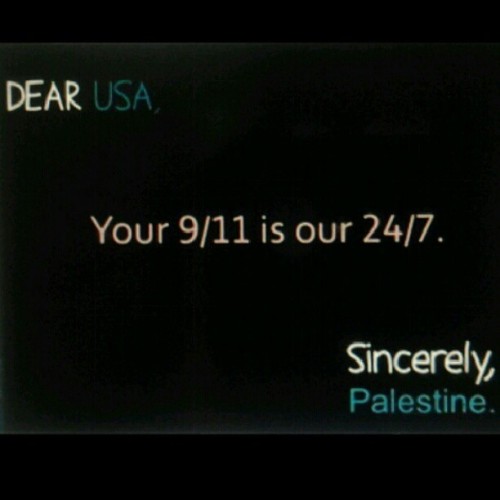
This week started off innocently enough. It was my first real week of work and I was eager to getting started and to begin feeling more integrated in the office environment. Tuesday was the 11th anniversary of September 11th and it was business as usual. Aside from checking Facebook news feeds and the news headlines, there was very little "on the ground" affirmation of the day. Which makes sense; when I've spoken with Moroccan friends about the terrible tragedy in New York City on September 11th, 2001 very often they respond with a comparison. They may comment about how our death count in the Middle East since 9/11 significantly overshadows the three thousand-something casualties we incurred that day; they will bring up Palestine, or the ongoing events in Syria. It's not that what happened in the US eleven years ago isn't important or wasn't devastating, but having discourses like this that don't always end in proverbial back rubbing is (for me, at least) in a way its own form of catharsis. It's nice to live in a world where the United States isn't the center of attention and to reflect on the significance of other violent and unwarranted attacks that go on around the world. My heart goes out to the victims, their families, and their communities. I can only imagine what it feels like.


In ways, being in the MENA region on the anniversary makes me think about it and its implications even more. I recognize September 11th as a terrible day not only for the American people, but as a grim indication of the impossibility for peaceful foreign and domestic policy to occur in the future. On Tuesday I hopped in a taxi on my way to work. The driver was making light conversation as we wove through morning traffic. As we drove, I looked out the window to see everyone going about their daily business: shop keepers sweeping the sidewalks, women in djellabas carrying raffia baskets and tugging along small children as they completed her errands, men colluding at coffee shops around fanned-out newspapers and cigarettes, women frying breads outside small corner stores on large metal griddles. This is what daily life in Morocco looks like to me. There are no car bombings and no anti-American banners or flag burnings. In my experience, if a Moroccan doesn't understand or agree with an element of American foreign policy, they will want to ask you about it, not attack you for it. As an American in their country they give you the benefit of the doubt. They welcome you with open arms. These are the Muslims that I interact with everyday.

It is because of my daily experiences here that I find what happened in Benghazi and what spread to consulates all over the world devastating and sickening. I have friends who work at the US Embassy in Rabat scared at the possibility that the same thing could happen to them. My family was worried for my safety. It didn't help at all when it was released that one of those killed at the US consulate in Benghazi was from my home town. He was a Navy Seal and taught English in Morocco as a Peace Corps volunteer. Though I am confident that the worst is over in Morocco, I'm trying to stay up to date on the news and am checking the Moroccan US Embassy website regularly for any breaking security warnings.

 On Friday peaceful protests broke out all over the MENA region directly following midday prayer. In Morocco, there was a protest of a few hundred Salafist Muslims organized in Salé, Rabat's neighbor across the river, and one of with numbers between 300 and 400 people near the US consulate in Casablanca. Aside from the symbolic burning of the American flag, heavy police presence (especially for the one in Casablanca), and anti-American chants (seen at nearly every protest that occurred that day across the world), both were small in size and relatively mild. The only reason I know that they happened at all was because my cab driver on my way home from work was listening to the news. I felt no tension or witnessed anything firsthand.

According to a report from Al-Jazeera on Sunday, King Mohammed VI spoke on the phone to Hillary Clinton, where he called both the murder of the US ambassador to Libya Chris Stevens and the film that has provoked these protests and attacks as, "odious". In an official palace statement, King Mohammed VI expressed his, "sincere condolences" over Tuesday's events in Benghazi while also condemning, "the inadmissible provocation agains the sacred values of the Muslim religion".


In regards to the "anti-Islamic documentary" that supposedly started all of this, there is increasing evidence that points to the fact that the film wasn't even made by an American Jew, but rather a Coptic-Christian American named Nakoula Basseley Nakoula looking to incite violence between the West and the Muslim world. What's more is that several sources have come out saying that even the actors performing in this incredibly sub-par and low budget film claim that they were seriously misled. Mentions of the Prophet Mohammed in the film seem to have been dubbed in during post-production. Regardless, I see the events that occurred as avoidable, unnecessary, and embarrassing. There seems to be blood on everyone's hands.

All of a sudden, with last week's events, we (Americans) are back with the image of Muslims as extremists and the entire MENA region as a breeding pool of blind hatred towards the West. How many years of progress in foreign relations have been erased? How many will it take to bounce back? To all that were involved I wish to ask this simple question: was it worth it?


Sunday, May 20, 2012

Falling in love with Paris all over again

Last weekend finally arrived, the weekend where all of his things were packed up to leave for the summer back to the U.S. Since he was flying out of Paris, we decided what better send-off than to spend one last weekend together in Paris before his Sunday departure? (It was also helpful because I needed to renew my visa.)

At 4 in the morning we rolled/dragged all of the suitcases and got picked up in a grand taxi to be taken to the airport. We woke up a few hours later as we were landing in Paris on a rainy Friday morning. After finding our hostel we wandered around the city trying to soak in as much as we could. Here are a few photos from our trip.


Like any good tourist, we started by wandering down towards the Seine and then made our way over to the Louvre. I am always blown away by how grand the architecture is in Paris. Everything feels like it was placed with the greatest of intention - every fountain, flower box, statue, and pigeon. 


While we were debating about whether or not to go inside, we decided to do some trompe l'oeil photography. 


"Winged Victory"
Mounted in an archway atop a landing on a marble stairway, this statue representing the goddess Nike towers over all visitors wishing to enter her wing of the museum. Such a breathtaking piece of art. 


This is the face you make when you realize that Friday nights the Louvre is free after 6 pm for all under 26 year olds! 


Ingrès - L'odalisque

Seeing this painting felt like I was meeting a friend for the first time after years of written correspondence. L'Odalisque was one of the major influences/references that I used in my senior thesis last year on the contemporary literary/visual art response to 19th century French orientalist art's depictions of North Africa. Interestingly, though Ingres is known for his depictions of the Orient, he actually never once set foot in North Africa. The furthest he got was Italy.  


A view from outside the Louvre. For those of you who haven't visited the Louvre, this once was the palace of the king of France. The entrance of the museum is through the glass pyramid.


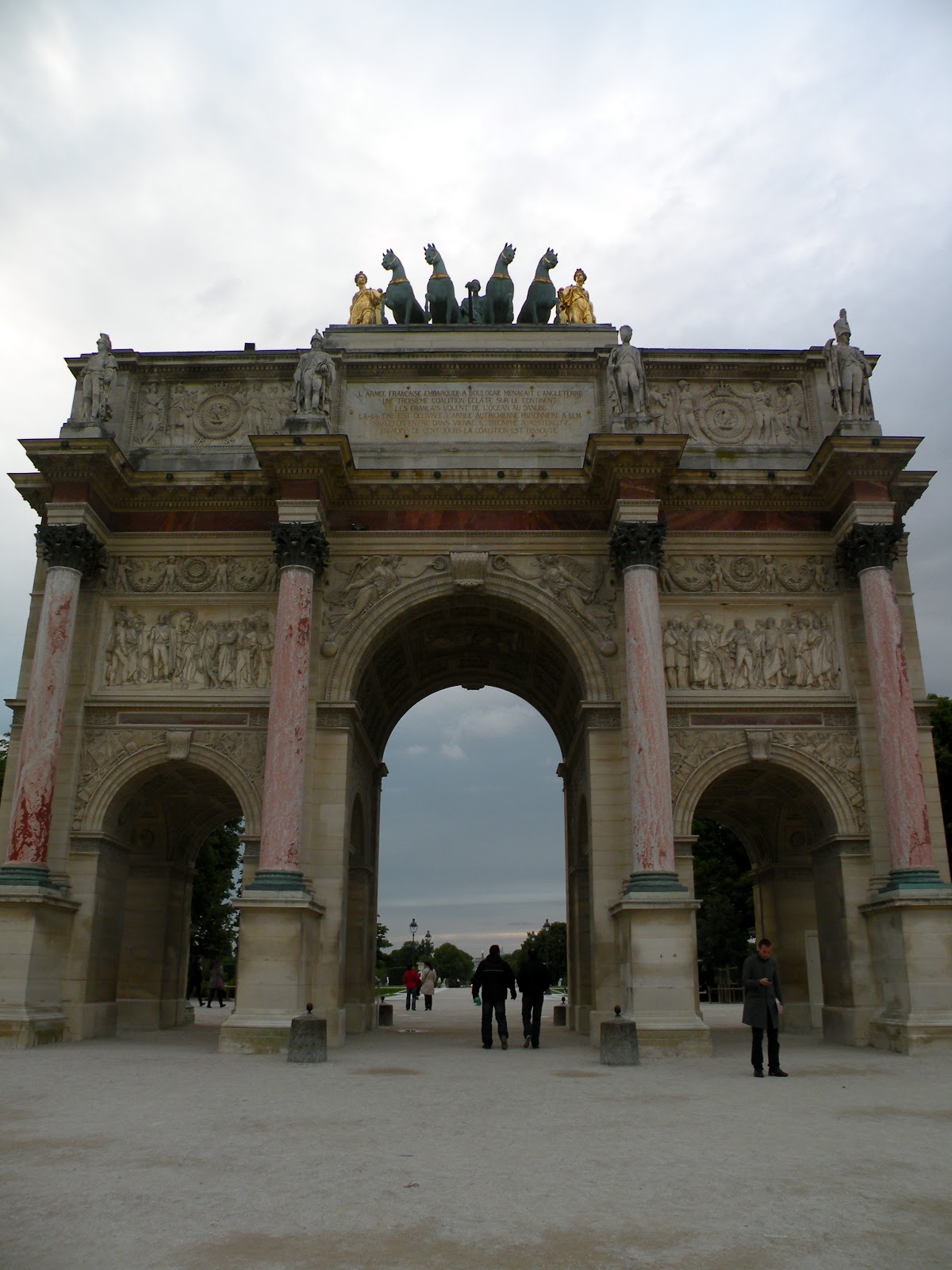
The archway across from the Louvre. Though this picture doesn't do it justice, I was struck again by the marvels of French architecture. We came upon the arch just as the sun was setting, and if you looked straight through the archway you would see a tree-lined garden "boulevard" (too wide or grand to be called simply a pathway) with Cleopatra's needle, and then finally the L'Arc de Triomphe mirroring this arch on the other side.  


Our hostel shares its arrondissement (18e) with Montmarte and Sacre Coeur. This is the view of the church from our walk to Gare du Nord train station, our nearest metro stop.


On Saturday, we went to the Catacombs, which begin close to the Denfert-Rochereau metro stop. Apparently this location is just south of what used to be the city gate, which was called the "La Barrière d'Enfer" (The Gate of Hell). 

Built in the 18th century as a way of dealing with the overflowing city cemeteries due to various battles and plagues, the Parisian catacombs are a sight to behold. It is a series of tunnels that stretch over a mile long and are filled with neatly stacked bones of over six million skeletons. The whole site has a very macabre vibe. At each turn there is a new marble plaque that has a quote usually in Latin or French about death. For instance, after going down over a hundred steps to get into the catacombs, there is a sign hung above an archway that reads:

 "Arrête! C'est ici l'empire de la Mort"

(Halt! Here is the empire of Death.)

There was another plaque further along that read:

"où est elle, la Mort? Toujours future ou passée.
 A peine est-elle présente que déjà elle n'est plus." 

(Where is she, Death? Always in the future or past. As soon as she is present she is no longer.)


The catacombs were fashioned out of old Parisian mines. Back when France was part of the Roman empire, it was customary to bury the dead on the outskirts of the city (interestingly, this practice is also seen in the way that the old Moroccan medinas are set up - with the cemeteries by the outer walls). However, with the arrival of Christianity, it became customary to bury the faithful in consecrated ground around churches. Between population growth, war casualties, and plague victims, the amount of dead was leading to not only spatial issues but sanitation ones as well. Moving the bodies underground seemed like a logical solution.


Afterwards, we continued strolling and sight seeing. 


France's color palette: beige, iron black, green, glass. 


We kept remarking about how great it was to spend a few days in France as an interim before he headed back to the U.S. not just because it's Paris, but because it helped facilitate a gradual adjustment to the inevitable culture shock of returning to the U.S. after spending nearly a year in Morocco. Though it is still very different from Morocco, there were several commonalities that we found to be comforting. First of all, while the city was comparatively pristine to our home of Rabat,  the similarities in the architecture of the buildings in Paris to the ones that line the grand boulevards in Rabat were undeniable (though admittedly, ours are a bit more worn down). Another similarity was in the language, though not in the way you would expect. While walking through the city we often heard more Moroccan darija than Parisian French, which made our ears perk up. On our last night in the city we grabbed falafels by the Notre Dame Cathedral at a small little stand on a cobble-stoned side street. I overheard several clients speaking to the man behind the counter in Arabic, so I decided to order in the true lingua franca. After a short exchange, we realized that not only was he a Moroccan immigrant, but he grew up in Rabat in the quartier just next to ours! It's moments like this that make you feel like the world isn't the large after all. 

After 48 hours in Paris, we found ourselves staying up late drinking wine from the bottle and agreeing that we should live here some day. 

Wednesday, May 16, 2012

"Sarkozy, c'est fini!"


On the evening of May 6th, the long-awaited French presidential election results announced François Hollande as the next French president by a mere 3.8% over Sarkozy (51.9 to 48.1, according to Le Monde). The crowd of hundreds of thousands of Hollande supporters cheered and popped bottles of champagne around the Bastille as they waited for Hollande to make his first address as president.


I heard a report on NPR's Morning Edition that discussed France's election night, Hollande's plans for France, and the differences between Sarkozy's and Hollande's political platforms. One of the major differences that was highlighted in the news program (as well as in other popular media outlets) is their position on immigration and foreign affairs. While Hollande welcomes multiculturalism and more progressive approaches to strengthening France's international relationships, Sarkozy has always preferred more traditional and exclusionary tactics. Towards the end of the program there was a clip of the cheering crowd outside the Bastille when out of nowhere a voice comes to the forefront and shouts, "Vive la France! Vive les Marocains!". It made me reflect on how French politics affect Moroccan (and North African, more generally) society. What do Moroccans have invested in having their presidential candidate win office in France? Will France's relationship with Morocco change now that Hollande is president?


In late April, the French Embassy in Morocco published the results of the French elections in Morocco. There is a large portion of the urban population in Morocco that hold dual citizenship, which gives them the ability to vote in the French elections. In Rabat, François Hollande took the lead with 43.5% and Nicolas Sarkozy was the runner up with a mere 26.9%. The rest of the votes were divided among the remaining three candidates.

While the results differed depending on the city (Sarkozy won the majority vote in Marrakech for instance), what is undeniable is that the French elections were considered an important issue for Moroccans. Throughout the election cycle I had several conversations with my English language students about their opinions on the candidates, the French electoral process, and their hopes for the future of France. Most of my students are professionals who work for companies or organizations with strong European ties. Even if they don't think that the outcome of France's election will greatly affect aspects of their personal life, they all agree that it would change the way they do business with their French clients and partners.

From the students "polled", it was unanimously stated that they felt that Sarkozy was a disappointing president, and certainly not the type of president that France needs now. While some felt that Sarkozy's "work more, earn more" mantra did good things for the French economy, his eccentric personality made him difficult to trust his judgement in times of hardship. They believe that the French are ready to trade in their hot-shot celebrity president for someone more humanistic and moderate.

Furthermore, Sarkozy's strong anti-immigration and anti-multiculturalism stance weakened the country by dividing France into ethnic and cultural factions. He candidly identified certain groups as better than others, which led to a less united country. While he gained the support of the far-right through these actions, he lost the respect of everyone else. One student even said that Sarkozy was "France's George Bush": he managed to debase France's long history of high culture through his poor language and ignorant view point on immigration.

I see several paralells between Hollande's campaign and Obama's 2008 presidential campaign. The first similarity is in the type of candidate they are competing against. Sarkozy ran an incredibly conservative campaign whose foundation rested on the pillars of social conservativism and anti-multiculturalism. Ring any bells? The second similarity was in their progressive campaign slogans. Hollande's, "Le changement, c'est maintenant" (The change is now) begged for comparisons to Obama's 2008, "Change we can believe in" campaign slogan. Finally, the third similarity is in their voter demographic. While both Sarkozy and John McCain pushed for tighter immigration restrictions and paraded anti-multiculturalist values and bill proposals, both Hollande and Obama recognize the importance of the minority/immigrant vote. It will be interesting to see if these seemingly symbolic paralells seen between the two presidents' campaigns will manifest itself into anything significant as time progresses.


On a final note, I found out yesterday from one of my students that after the election results were announced, King Mohammed VI of Morocco coridally invited Nicolas Sarkozy to come to Morocco for a vacation. After François Hollande was officially sworn in yesterday as the President of the French Republic, Sarkozy boarded the King's private jet and set off to spend some time sunning himself at a resort in Marrakech. I asked my student if this gesture holds any greater political implications, since it seemed to me that the King still stands by Sarkozy. My student just shook his head and said, "No, I don't think so. The King did the same thing for Jacques Chirac."


Thursday, March 22, 2012

Tarifa: Seeing Africa from a different perspective

After a while, it doesn't matter where you live - routine sets in and the "honeymoon" feeling wears off. The cultural, environmental, and linguistic differences that were once new and special become normalized and fade into a soft indecipherable blur. I sleep through the 5 am call to prayer and forget which language I had conversations in. I find myself sometimes caught off guard when I am walking down the street and realize that the oak-lined sidewalks of my childhood have been replaced by tall looming palm trees. I never thought I'd have to remind myself that I am living in North Africa, but le voilà.

An easy way that we have learned to keep things "fresh" has been to travel. Unfortunately, it prevents a bit of a catch-22: to travel, you need money. To have money, you need a job. When you have a job, it is difficult to get time off to travel, which leads to the boredom created by routine, and by proxy, a desire to travel.

We have been making an effort to travel more frequently this Spring. It certainly helps that a condition of our visas is that we must leave the country every 90 days to renew them. Last weekend we decided to go to Tarifa, Spain. We chose Tarifa because of its proximity to the Moroccan coast. On a clear day from the beach in Tangiers you can sometimes see the coastline in Tarifa. On Friday morning we packed up a few things, took the 4 hour train to Tangiers, and then hopped on a ferry. We arrived in Tarifa around 11 pm on Friday. The gates to the port lead you right into the cobble-stoned roads of the old "medina" city. Feeling slightly off-kilter from the various forms of transportation and fatigue, I felt like we were entering an alternate-reality version of Morocco. The narrow streets, white washed walls, and painted doors seemed all too familiar. There were two major differences, however, that reminded me we had crossed the border: Catholic churches and rows and rows of bars. The weather was very mild and on our way to find our hostel we passed groups of locals and tourists mingling around outdoor tables beside pubs, smoking cigarettes, and petting dogs. Even though we felt exhausted from a day of traveling, we were pleased by our timing, because11 pm is just about the time that Spaniards seem to wake up from their afternoon siestas and begin to go out.  Below is a photo of our welcome-to-Tarifa mojitos, with mint and raw cane sugar muddled right in front of us:


The following day we spent at the beaches. Tarifa is known for its strong winds and many tourists come for the kite and wind surfing. The coastline was freckled with different colored kites and sails. We began by walking along the beach on the Atlantic Ocean (where we saw a presumably Arab female pop singer filming a music video) and then crossed over the boardwalk onto the beach on the Mediterranean Sea. Sitting on the soft warm sand amongst Spanish families, international tourists, and nude sunbathers, I was stunned by the view: across the sparkling ocean was the large dark green mountainous terrain of North Africa. We met an American woman who moved to Spain 8 years ago and has started a family in Tarifa where she opened the first English school in the city. When talking about where we were coming from, she admitted that she didn't know anything about Morocco, let alone Rabat, the city where we live. It was an odd feeling to be sitting on the beach in Spain facing Morocco and talking to a fellow American woman who spent almost a decade on the opposite side of the Mediterranean without knowing anything about the neighboring country. She was fascinated when we told her about how architecturally similar Andalucia and Morocco are because of their long complicated history. Looking up past the beach the coast of Tarifa is lined with ancient fortress ruins that are almost mirror images of those found along the Moroccan coastlines. How is it that two countries with such shared history and culture can be so cognitively disconnected?


In any case, spending the weekend in Tarifa not only helped me recharge my batteries but it also helped me reconnect where I am, what I'm doing, where I'm going, and how I'm feeling. My current global positioning is Morocco. Instead of making comparisons between Spain and the United States, I am finding commonalities between Spain and my present home turf of Morocco. Walking through the winding streets of the old Tarifa "medina" and noticing street names with Arabic cognates or stumbling upon a restaurant or boutique that markets the Moroccan or African aesthetic exoticism really helped remind me how lucky I am to be able to observe and appreciate the cultural similarities that Morocco and Spain share because of my understanding of how historically these two countries' stories weave together.


The Spaniard lifestyle is one that I can certainly get behind. Their day starts around  ten, morning coffee can be replaced with beer, and after a leisurely afternoon milling around cafés and a long lunch, it is customary to have a siesta to recharge before a long evening out on the town. Saturday afternoon we were wandering around the old city of Tarifa and heard what sounded like a crowd of people singing, laughing, and banging on drums. We followed the sound into an open neighborhood square lined with taverns opening onto the cobblestoned courtyard. Parents were sitting around outdoor tables having a drink while their children ran around together, performed on a small stage, sang songs, and played musical instruments strewn about. It is scenes like this that remind me of what I love so much about Spanish family culture. Instead of treating drinking and adult socializing as an event that must be kept separate and out of reach of the children, parents take their kids out with them as a way for the family to spend time together. It also gives children positive examples of moderate and responsible drinking.


On Sunday morning we woke up to the sound of church bells ringing outside our window. After a vegan brunch at the Tarifa Eco Center (Tarifa has several vegetarian/vegan cafés, if you can believe that!), we took a leisurely stroll around the city, had a beer, and enjoyed the sunshine. We returned to Tangier by ferry on Sunday afternoon with sand in our hair and a fresh batch of freckles.


Tuesday, February 21, 2012

Happy 1 year anniversary, Feb. 20th Movement!

A year ago yesterday marked the beginning of what is now known as the "February 20th Movement" in Morocco. Inspired by its neighbors in Tunisia and across the MENA region, the "February 20th Movement" was born as a way for Moroccans to stand up against the stagnation and corruption of the current government while not calling for a complete regime change. Within the last year the King has responded to these protests by calling for a new government, and within the last few months the Moroccan people have been waiting patiently as the process takes shape.

An article published in the New York Times yesterday titled "Moroccan Protests One Year On" adequately sums up the situation the Moroccan people find themselves in one year after it all began.


Still, while the uprising of Morocco’s youth brought concessions that unions and human rights groups had failed to obtain in the previous decade, observers say that the real victory is a widespread awakening of political awareness.
“For the first time there is clearly a counterbalance to power — the people,” said Abdellah Tourabi, a researcher at the Paris Institute of Political Studies who specializes in Islamic movements in Morocco. “The ‘street’ has become a true political player.”


Yesterday in Rabat I was expecting to see large protests or public celebrations in honor of the one-year anniversary. Of course, there were large protests in particular areas of the city but for the most part the city felt calm and tranquil. The activists behind the February 20th Movement created a documentary called, "My Makhzen and Me" and had a film screening in Rabat last night at 6 pm. 


There were also round table discussions and activities throughout the day to discuss the role of demonstration and art in creating an effective political narrative. I am impressed by the movement's maturity by opting for constructive community-building activities over a shock-and-awe display. Though perhaps I shouldn't be too surprised, considering the movement has been for the most part very reasonable in their methods for calling for political change. It will certainly be interesting to watch if and how the "February 20th Movement" continues to play a role in Moroccan politics, and how their sociopolitical position will develop in the coming months as the new Moroccan government becomes more established. Will their sentiment remain relevant? 

Sunday, January 29, 2012

Morocco drafts the Arab-European resolution for Syrian crisis


Author's note: 

This is an article I recently submitted to The Humanitarian, a newspaper that my friend recently started in Western Massachusetts. I am acting as her "foreign correspondent" in Morocco. 

-------


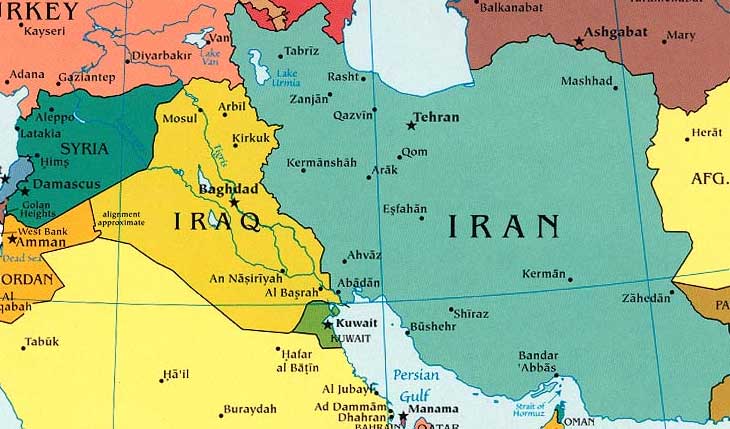
This Friday, in collaboration with the Arab League and the U.N Security Council, Morocco distributed a draft of the Arab-European resolution among members of the U.N. Security Council on the violence that the Syrian government has been inflicting on its own people since the summer of 2011. The document expresses, “grave concern” for how the situation in Syria has been rapidly deteriorating despite the presence of Arab League observers in the country and calls for an immediate end to the violence. The drafted resolution also cites the continued transfer of weapons into Syria as a major contributor to the rising casualty count of citizens and calls on member states to abide by requests to halt any future transfers. While the document firmly orders an end to the widespread and abhorrent human rights violations by Syrian authorities, the document also stresses that it is fully committed to Syria’s best interest through promoting its sovereignty, independence, and territorial integrity and solving the crisis in a peaceful manner, which includes letting those who fled the country a safe return home. 


The online English newspaper Al-Arabiya News obtained a copy of the new draft, in which it clearly lists the wide range of atrocities committed by the Syrian government on its own people, “the use of force against civilians, arbitrary executions, killing and persecution of protesters and members of the media, arbitrary detention, enforced disappearances, interference with access to medical treatment, torture, sexual violence, and ill-treatment even against children”. The document continues by stating that all those who are found to be responsible for human rights violations must be held accountable for their actions.  


With the goal of the resolution being a peaceful end to violence in Syria, the drafted document recognizes that peace and stability in Syria is the key to ensuring peace and stability in the entire region. The document outlines the realization of this goal by Syria completing the following steps: ending all violence, releasing political prisoners, withdrawing all Syrian military and security forces from towns and cities, guaranteeing the freedom of peaceful demonstrations, and allowing full access and movement for all relevant Arab League officials and institutions. The international community has more to be concerned about with than just the rising casualty count. Syria is a fragile geopolitical keystone that both the Arab League and the U.N. depend on to act in their collective best interests in order to secure their influence in the region. 


While still speculative, this document holds the potential to change the way Morocco is perceived in the international community. As an example of political and economic stability in a region that has been filled with uprisings and uncertainty, many nations are looking to Morocco as the beacon of regional hope. If this drafted resolution is successful this could mean Morocco becoming a more influential player in international policy decisions. 

A brief history of the Arab League
The Arab League, officially called the League of Arab States, was formed in Cairo on March 22, 1945. There are currently 22 official members and four observers, since Syria’s membership was suspended in November 2011.  


The Arab League was originally formed around the era of pan-Arabism with the goal of strengthening and coordinating political, cultural, economic, and social programs of all members and mediating disputes among them or with third parties. Over the last six and a half decades, the Arab League has focused on creating a close-knit relationship among members through considering the affairs and collective interests of all involved countries while protecting their independence and sovereignty. One of the most famous examples of the Arab League’s ability to limit conflicts was the 1958 Lebanon Crisis. The League has also historically served as a platform for the drafting and conclusions of many important documents that promote economic integration among members. 


Sunday, January 15, 2012

MTV Arabia, Al-Jazeera, and the issue of Arab media censorship

The study abroad program that I am interning for in Rabat offers two different types of housing for students: homestays in the old medina and independent dormitory-style. While female students have the option of living in a single-sex university dormitory, there is no viable alternative for male students who do not wish to live with a homestay. As a result, the program rents out a large 3-bedroom apartment that is a ten minute walk from the study abroad center. Last semester no male students requested the apartment living option, so we were able to live there pro-bono. Although it was sparsely furnished, we relished the ample amount of living space and safe neighborhood surrounded by foreign embassies and government buildings.

Unfortunately for us, we were notified in December that several male students requested the apartment for the spring semester, which meant that we were relocated us to a nearby apartment in a very nice neighborhood. Though I am grateful for the free housing and am happy that this apartment is much better furnished, the size of the apartment took some getting used to, as it is a small fraction of the size the apartment that we used to live in. Downsizing from an apartment that allowed enough space to do ten cartwheels between the kitchen and the living room to a one-bedroom/one bathroom studio is never an easy task.

One big perk about this new apartment, however, has been the satellite television. I realize that this may sound trivial, but after living in Morocco for about a year collectively, it is impossible to ignore the cultural importance that satellite television has in Moroccan society. Even in the most desolate and impoverished areas of the country, perched atop mud huts in the mountains or in the slums outside of Casablanca, satellite dishes sit like huge flocks of migratory birds. I have learned that to live like a Moroccan is to have a television.


Sitting in Café Viking in the city center of Rabat writing this blog post, there are two large flat screen televisions facing me. The choice of broadcasting usually depends on where you are. When there isn't an important football game on, this particular café enjoys showing the National Geographic channel. (From my peripherals, I am watching vultures feeding on a carcass on an exotic beach.)


Since moving into our new apartment, we have explored the vast and numerous channels on our television set: Quranic channels; international news broadcasted in Arabic, French, or English; dubbed over American and Asian cartoons; local channels from Chad or Bahrain; American film channels; Bollywood; international soap operas.


One of the most fascinating channels to watch has been MTV Arabia, which broadcasts a hand-picked line-up of MTV programs (some old, some new, some British) with Arabic subtitles. While the channel shows mostly familiar reality-based programs, such as True Life, Made, and Real World/ Road Rules, the main difference between American MTV and MTV Arabia is the level of censorship.


While most American viewers are accustomed to hearing a few "bleeps" during reality programs when characters use exceedingly vulgar language, it shocked me when watching an episode of True Life and realizing that the channel decided to blur out the faces of a teenage couple sharing a kiss.

Along with public displays of affection, MTV Arabia also censors words like, "sex", "breast", and "butt", but still allows footage of female Arab pop stars wearing bustiers and gyrating in glittery music videos. To me, this level of censorship only seems to promote an unrealistic notion of sexuality that encourages fetishization and objectification of the female body and Western culture. Frankly, I don't understand the logic.

Arab pop star Dominique Hourani


After doing a bit of research on the subject of Arab media censorship, I learned that up until the 1990's almost all television channels in the Arab world were strictly owned and monitored by the government. This changed in the 90's with the boom of satellite television. A perfect example of this change cited by an article from the online publication Al-bab.com is the al-Jazeera network, which is owned by the Qatari government. In the mid 90's, al-Jazeera became one of the first channels to broadcast in-depth live news broadcasts from all over the world, including Israel. Its discussion-based programs that presented dialogues on previously taboo subject matter promoted a, "...new atmosphere of increased freedom and competition" in Arab media.


With the much of the Arab world in the midst of socio-political crisis, Morocco is being looked to both within the MENA region and the West as a beacon of progress and hope for a brighter future of the entire Arab world. As Morocco continues down this road to modernization and transparency, will media censorship and regulation lighten up, or will the presence of the PJD, the moderate-Islamist party holding majority in Parliament keep a tight leash on media rights?


Wednesday, January 11, 2012

Praying for Rain: Morocco's reaction to climate change


Yesterday my flight landed in Casablanca after spending 3 weeks at home on the East coast. When I was home, no matter how much I tried thinking about going back, it was difficult to fully visualize what would be waiting for me. I am still growing accustomed to my international lifestyle (not that I’m complaining, but it is certainly a transition from growing up in a Boston suburb and taking the occasional week-long family trip outside the country). Just as it takes a few days to adjust one’s biological clock, I believe that with your mind and heart in different places, I think it is possible to have a few days of emotional jet lag as well. 


However, let’s get one thing straight: I am beyond enthused to have the opportunity to be here. I am also very pleased to say that my language skills haven’t seemed to have atrophied at all during their lack of use back in the United States. If anything, I feel refreshed from my weeks at home and am ready to give the next few months my all. 

What struck me with being home was how mild the weather was on average. Majority of my days home had temperatures in the 40’s when this season is supposed to be filled with snow, ice, and extreme wind chill. While it was certainly pleasant to not have to wear snow boots everyday, I couldn’t help but feel anxious about this abnormally warm weather. Where did winter go? 

Leaving work this afternoon in Rabat, I remarked to a co-worker about how I forgot how this time of day felt like here during the winter - it is nearly dusk and the air is filled with a cold humidity. She instantly understood what I was describing and told me the Arabic word for it: na-da. We began talking about how the climate change is affecting Morocco. The winter months are supposed to be when Morocco gets the majority of its rainfall. When I was in Morocco in the spring semester of 2010, it rained almost everyday in February, and I was told that it was a continuation of very similar weather in January as well. As an agrarian society, Moroccans place a high value on the seasonal rains and are very concerned about what its absence could mean in the months ahead. Rain has been described to me many of times by locals as the “money of Morocco”. Especially with a large portion of the country in a desert climate, it is worrisome that the lack of rain could equal immense droughts later on in the year during the hotter months. 


King Mohamed VI is no exception to this growing concern. Last Friday, the King ordered that everyone go to the mosque during Friday mid-day prayer to pray for rain. While this royal decree may seem like an archaic remedy, Morocco is not the only Muslim country to have done this. On Christmas Eve, Saudi Arabian King Abdullah called on his citizens all over the country to pray for rain as well. 


While the Moroccan King’s sought God’s assistance to alleviate this symptom of climate change, it doesn’t change the fact that the Moroccan government recognizes that it is going to take more than prayer to change the environmental damage already done. The Moroccan government has created a national environmental policy that stresses the importance of societal awareness. It has also already established a national inventory for sources of emission and of energy resources as well as signed and ratified the most recent global climate change treaties at the Summit Convention in Rio in 1992 and the Kyoto Protocol in 2002. Though statistically Morocco’s contribution to global emissions is rather insignificant to international averages, the Moroccan government continues to carry out a vigorous environmental policy based primarily on the establishment of a legal team to carry out national regulation.

A map of Morocco showing average yearly rainfall

It is now Wednesday evening in Rabat and there is still no sign of rain in the forecast. I walk past produce stands filled with crates of brightly colored fruits and vegetables and wonder to myself what this scene will look like a few months from now if the rain doesn’t come. Whether by an act of God or an atmospheric shift, I hope that the rains come soon.