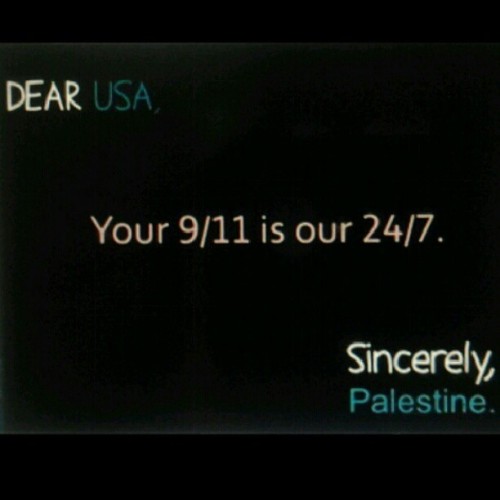
This week started off innocently enough. It was my first real week of work and I was eager to getting started and to begin feeling more integrated in the office environment. Tuesday was the 11th anniversary of September 11th and it was business as usual. Aside from checking Facebook news feeds and the news headlines, there was very little "on the ground" affirmation of the day. Which makes sense; when I've spoken with Moroccan friends about the terrible tragedy in New York City on September 11th, 2001 very often they respond with a comparison. They may comment about how our death count in the Middle East since 9/11 significantly overshadows the three thousand-something casualties we incurred that day; they will bring up Palestine, or the ongoing events in Syria. It's not that what happened in the US eleven years ago isn't important or wasn't devastating, but having discourses like this that don't always end in proverbial back rubbing is (for me, at least) in a way its own form of catharsis. It's nice to live in a world where the United States isn't the center of attention and to reflect on the significance of other violent and unwarranted attacks that go on around the world. My heart goes out to the victims, their families, and their communities. I can only imagine what it feels like.

In ways, being in the MENA region on the anniversary makes me think about it and its implications even more. I recognize September 11th as a terrible day not only for the American people, but as a grim indication of the impossibility for peaceful foreign and domestic policy to occur in the future. On Tuesday I hopped in a taxi on my way to work. The driver was making light conversation as we wove through morning traffic. As we drove, I looked out the window to see everyone going about their daily business: shop keepers sweeping the sidewalks, women in djellabas carrying raffia baskets and tugging along small children as they completed her errands, men colluding at coffee shops around fanned-out newspapers and cigarettes, women frying breads outside small corner stores on large metal griddles. This is what daily life in Morocco looks like to me. There are no car bombings and no anti-American banners or flag burnings. In my experience, if a Moroccan doesn't understand or agree with an element of American foreign policy, they will want to ask you about it, not attack you for it. As an American in their country they give you the benefit of the doubt. They welcome you with open arms. These are the Muslims that I interact with everyday.
It is because of my daily experiences here that I find what happened in Benghazi and what spread to consulates all over the world devastating and sickening. I have friends who work at the US Embassy in Rabat scared at the possibility that the same thing could happen to them. My family was worried for my safety. It didn't help at all when it was released that one of those killed at the US consulate in Benghazi was from my home town. He was a Navy Seal and taught English in Morocco as a Peace Corps volunteer. Though I am confident that the worst is over in Morocco, I'm trying to stay up to date on the news and am checking the Moroccan US Embassy website regularly for any breaking security warnings.
On Friday peaceful protests broke out all over the MENA region directly following midday prayer. In Morocco, there was a protest of a few hundred Salafist Muslims organized in Salé, Rabat's neighbor across the river, and one of with numbers between 300 and 400 people near the US consulate in Casablanca. Aside from the symbolic burning of the American flag, heavy police presence (especially for the one in Casablanca), and anti-American chants (seen at nearly every protest that occurred that day across the world), both were small in size and relatively mild. The only reason I know that they happened at all was because my cab driver on my way home from work was listening to the news. I felt no tension or witnessed anything firsthand.
According to a report from Al-Jazeera on Sunday, King Mohammed VI spoke on the phone to Hillary Clinton, where he called both the murder of the US ambassador to Libya Chris Stevens and the film that has provoked these protests and attacks as, "odious". In an official palace statement, King Mohammed VI expressed his, "sincere condolences" over Tuesday's events in Benghazi while also condemning, "the inadmissible provocation agains the sacred values of the Muslim religion".

In regards to the "anti-Islamic documentary" that supposedly started all of this, there is increasing evidence that points to the fact that the film wasn't even made by an American Jew, but rather a Coptic-Christian American named Nakoula Basseley Nakoula looking to incite violence between the West and the Muslim world. What's more is that several sources have come out saying that even the actors performing in this incredibly sub-par and low budget film claim that they were seriously misled. Mentions of the Prophet Mohammed in the film seem to have been dubbed in during post-production. Regardless, I see the events that occurred as avoidable, unnecessary, and embarrassing. There seems to be blood on everyone's hands.
All of a sudden, with last week's events, we (Americans) are back with the image of Muslims as extremists and the entire MENA region as a breeding pool of blind hatred towards the West. How many years of progress in foreign relations have been erased? How many will it take to bounce back? To all that were involved I wish to ask this simple question: was it worth it?
In ways, being in the MENA region on the anniversary makes me think about it and its implications even more. I recognize September 11th as a terrible day not only for the American people, but as a grim indication of the impossibility for peaceful foreign and domestic policy to occur in the future. On Tuesday I hopped in a taxi on my way to work. The driver was making light conversation as we wove through morning traffic. As we drove, I looked out the window to see everyone going about their daily business: shop keepers sweeping the sidewalks, women in djellabas carrying raffia baskets and tugging along small children as they completed her errands, men colluding at coffee shops around fanned-out newspapers and cigarettes, women frying breads outside small corner stores on large metal griddles. This is what daily life in Morocco looks like to me. There are no car bombings and no anti-American banners or flag burnings. In my experience, if a Moroccan doesn't understand or agree with an element of American foreign policy, they will want to ask you about it, not attack you for it. As an American in their country they give you the benefit of the doubt. They welcome you with open arms. These are the Muslims that I interact with everyday.
It is because of my daily experiences here that I find what happened in Benghazi and what spread to consulates all over the world devastating and sickening. I have friends who work at the US Embassy in Rabat scared at the possibility that the same thing could happen to them. My family was worried for my safety. It didn't help at all when it was released that one of those killed at the US consulate in Benghazi was from my home town. He was a Navy Seal and taught English in Morocco as a Peace Corps volunteer. Though I am confident that the worst is over in Morocco, I'm trying to stay up to date on the news and am checking the Moroccan US Embassy website regularly for any breaking security warnings.
On Friday peaceful protests broke out all over the MENA region directly following midday prayer. In Morocco, there was a protest of a few hundred Salafist Muslims organized in Salé, Rabat's neighbor across the river, and one of with numbers between 300 and 400 people near the US consulate in Casablanca. Aside from the symbolic burning of the American flag, heavy police presence (especially for the one in Casablanca), and anti-American chants (seen at nearly every protest that occurred that day across the world), both were small in size and relatively mild. The only reason I know that they happened at all was because my cab driver on my way home from work was listening to the news. I felt no tension or witnessed anything firsthand.
According to a report from Al-Jazeera on Sunday, King Mohammed VI spoke on the phone to Hillary Clinton, where he called both the murder of the US ambassador to Libya Chris Stevens and the film that has provoked these protests and attacks as, "odious". In an official palace statement, King Mohammed VI expressed his, "sincere condolences" over Tuesday's events in Benghazi while also condemning, "the inadmissible provocation agains the sacred values of the Muslim religion".

In regards to the "anti-Islamic documentary" that supposedly started all of this, there is increasing evidence that points to the fact that the film wasn't even made by an American Jew, but rather a Coptic-Christian American named Nakoula Basseley Nakoula looking to incite violence between the West and the Muslim world. What's more is that several sources have come out saying that even the actors performing in this incredibly sub-par and low budget film claim that they were seriously misled. Mentions of the Prophet Mohammed in the film seem to have been dubbed in during post-production. Regardless, I see the events that occurred as avoidable, unnecessary, and embarrassing. There seems to be blood on everyone's hands.
All of a sudden, with last week's events, we (Americans) are back with the image of Muslims as extremists and the entire MENA region as a breeding pool of blind hatred towards the West. How many years of progress in foreign relations have been erased? How many will it take to bounce back? To all that were involved I wish to ask this simple question: was it worth it?